Benadryl is a medication that is sometimes recommended to be given to cats. While plain Benadryl is usually safe to give, it is important to know what exactly Benadryl is, exactly how much to give your cat, and when to know if your cat needs Benadryl. Plus, you need to consider whether it is safe to give Benadryl to cats with underlying or pre-existing medical conditions.
Always consult with a veterinarian before administering Benadryl to ensure it is appropriate for your pet. Additionally, monitor your cat closely for any adverse reactions after giving the medication.
What Is Benadryl?
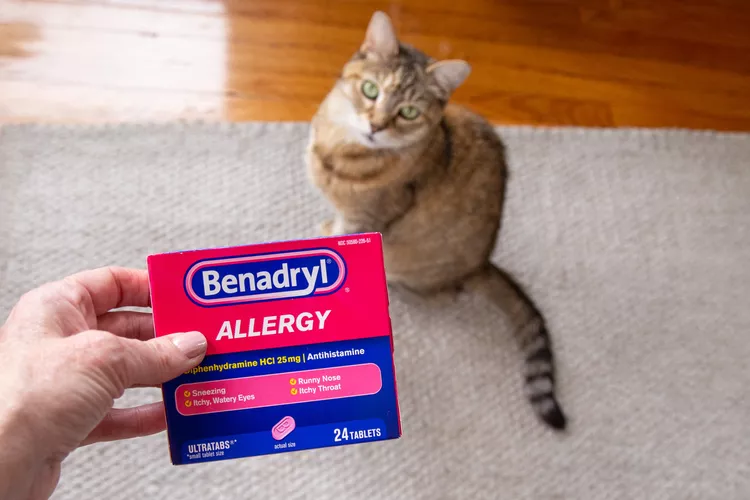
Benadryl is the brand name for a drug called diphenhydramine hydrochloride. Benadryl is an over-the-counter antihistamine medication, so it does not require a prescription. This antihistamine can be purchased as tablets, capsules, liquid gels, and even liquid in multiple strengths or milligrams depending on your needs.
Benadryl is sometimes combined with other medications that can be toxic to cats. Because of this, you will need to be sure to read the package carefully when purchasing the drug to ensure that diphenhydramine, the active ingredient in Benadryl, is the only drug in the product you are purchasing for your cat. Generic diphenhydramine is also available, as well as a faster-acting injectable form that your veterinarian will have available. If you are considering the use of Benadryl to treat symptoms in your cat, please consult with your veterinarian first.
How Does Benadryl Work?
Since it is an antihistamine, Benadryl blocks the effects of histamine in the body. These chemicals are released in the body in response to an allergic reaction not only in cats, but also in people, dogs, and other animals. Benadryl treats the symptoms of an allergic response or allergies including watery eyes, runny noses, swelling, sneezing, itching, and more.
What to Treat With Benadryl
Cats that may take Benadryl are typically ones that have known allergies or are traveling in a car or airplane, but there are other reasons why your cat may be recommended to take it. Some specific examples of when Benadryl may be used as guided by your veterinarian are:
- When a cat is stung or bit by an insect, such as a bee or scorpion.
- When a cat is bitten by a venomous reptile, such as a snake.
- When a cat is itching or scratching from environmental or food allergies. Flea allergy dermatitis is a common problem in cats and Benadryl may be recommended to temporarily relieve itching while the fleas are treated.
- When a cat is traveling and may experience motion sickness. Benadryl may help prevent your cat from vomiting as it also has anti-nausea effects.
- When a cat needs something to make it a little sleepy, such as during travel, so that it doesn't get too stressed when it needs to be calm and quiet.
- When pre-treatment of an antihistamine is needed before a vaccination that is known to cause an allergic reaction in that cat. Vaccine reactions are not common but if they do occur or have occurred in your cat in the past, Benadryl may be recommended by your veterinarian.
You should have some Benadryl on hand in your pet first aid kit if you have a cat, even if you never plan on traveling with it, or it doesn't have any known allergies. It is difficult, if not impossible, to predict when an insect will sting your cat and cause an allergic reaction. If you have Benadryl available, you may be able to lessen the allergic response that your cat would experience by giving your cat a dose. However, before using Benadryl or any over-the-counter medication, please consult with your veterinarian first.
Warning
Some allergic responses can be deadly. Some cats react so severely to insects or venomous reptiles that they cannot breathe without immediate veterinary care. This is especially true for brachycephalic or "smush face" breeds, like Persians, that already naturally have compromised airways without the added airway constriction that an allergic reaction can cause.
When Not to Use Benadryl
Benadryl is not safe for every cat to take. Some examples of when a cat should not take Benadryl include:
- If you have a highly stressed or anxious cat and want to make it sleepy. Its anxiety and stress need to be diagnosed and treated by a veterinarian instead of just sedating it with Benadryl.
- If your cat has heart disease, consult your veterinarian before giving Benadryl.
- If your cat has high blood pressure, consult your veterinarian before giving Benadryl.
- If your cat has glaucoma, consult your veterinarian before giving Benadryl.
- If your cat has a chronic medical condition, especially asthma, hyperthyroidism, seizure disorder, or liver disease, consult your veterinarian before giving Benedryl.
- If your cat is prone to dry eye (certain breeds are more at risk) or has had injuries to its cornea, consult your veterinarian before giving Benadryl.
- If your cat is taking specific medications, you should discuss the safety of giving your cat Benadryl with your veterinarian prior to administering it.
- Benadryl is not the sole remedy, nor is it the most effective treatment available for allergic reactions, motion sickness, or sedation. You should always consult your veterinarian to find the best treatment for the circumstances.
Benadryl Dosage for Cats
Typically, cats take 1 milligram of Benadryl for each pound of body weight two to three times a day. This means a 12.5-pound cat will take 12.5 milligrams (or half of a 25-milligram Benadryl tablet) up to three times a day, depending on your veterinarian's recommendation. Cats under 12.5 pounds may be more easily dosed using children's Benadryl liquid since it can be dosed more accurately; however, many cats may object to the bubblegum flavor. It is always important to make sure that diphenhydramine HCl is the only active ingredient in Benadryl.
Potential Side Effects and Risks of Benadryl
Benadryl can cause sleepiness, dry mouth, or urinary retention and potentially cause some gastrointestinal upset, such as diarrhea and/or vomiting. In cats, it may also cause a paradoxical effect meaning that the cat becomes very excited or jittery instead of sleepy.
Benadryl Overdose
If too much Benadryl is given to your cat, it can cause lethargy or excitement. Occasionally, a cat may also develop a dry mouth, have respiratory depression, get seizures, go into a coma, or even die if a large enough dose is administered.
Before giving your cat any type of medication, supplement, or over-the-counter medication, you should always discuss it with your veterinarian.
New