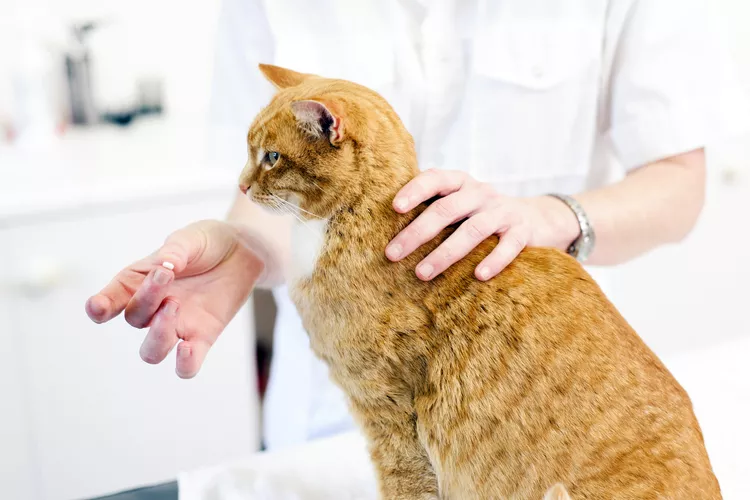
Cat's are notoriously difficult to get pills into. Just ask your vet! If your sick cat coughs or vomits after taking a pill, there is good reason to stop trying to administer the pill using the method you are using. The most common method of administering medications that can cause problems is dry pilling. If you've ever tried to swallow a dry aspirin without liquid, you'll recognize how uncomfortable the experience can be.
Dry Pilling Can Be Dangerous for Cats
Dry pilling without a water 'chaser' can lead to pills getting stuck in your cat's esophagus, which is the tube leading from the mouth to the stomach. If you are going to dry pill, you want to use a 'liquid' chaser as discussed below. The reason is that it is possible for both tablets and capsules to get 'stuck.' Even though we think of a capsule having a, smooth, gelatinous surface they also can lodge easily in the esophagus if using dry pilling. If a person repeatedly dry pills, it is possible that multiple capsules or tablets can lodge in a cat's throat.
How to Give Your Cat a Liquid Chaser
One method veterinarians advocate for to prevent issues with dry pilling, is following the dry pilling with 6mls of water via a needle-free syringe or dropper. It may seem impossible to force a cat to drink, but it is possible to help it along. Follow pilling with a liquid by using a syringe. Use a pet syringe from your vet's office and fill it with either plain water or low-sodium broth. The water chaser should be given right after the dry pilling.
Approach your cat with the syringe from the back or side for easier administering of liquids, rather than forcing the syringe into the front of its mouth, advises veterinarian Dr. Lisa Pierson on CatInfo.org. Keep the cat's head level, rather than tipped back, to facilitate swallowing. When administering a liquid chaser following dry pilling, be careful not to administer the liquid too quickly and allow your cat time to swallow.
Using Food to Avoid Dry Pilling
Fortunately, there are more tricks you can use to prevent problems when administering oral medications to your cat. You may be able to handle medicating your cat using food and treats.
- Conceal a pill in a pill pocket or another pill-masking product. You can purchase pill pockets for cats or make your own. Pre-made pill pockets are soft, cone-shaped treats with a hole down the center in which you place the pill.
- Offering a favorite treat from time to time without pills in it encourages future pilling cooperation. It'll also help get the pill into the stomach quickly so it can go to work.
- Give your cat a small portion of a regular meal of canned food before the pilling. Then, offer your cat a pill, and feed it more after it swallows the medicine. It'll help the pill go down smoothly.
- You can lightly coat the pill in olive or coconut oil to help it go down more smoothly.
Compounding a Medicine to Avoid Pills
If all else fails, ask your veterinarian for help in giving your cat its medicine in a different form. Though the cost may be a bit more, the result may be more palatable medicine for your cat.
- Some pharmacies will compound medications into flavored liquid doses. It's easier to swallow and tastier than pills.
- A compounding pharmacy can also formulate certain medications into a gel or ointment that can be rubbed into your cat's inner ear.
At least one of these solutions should relieve both you and your cat of the anxiety and discomfort found in dry pilling. It will help ensure the medication reaches the intestinal tract to be absorbed rather than becoming stuck in your cat's throat.
New