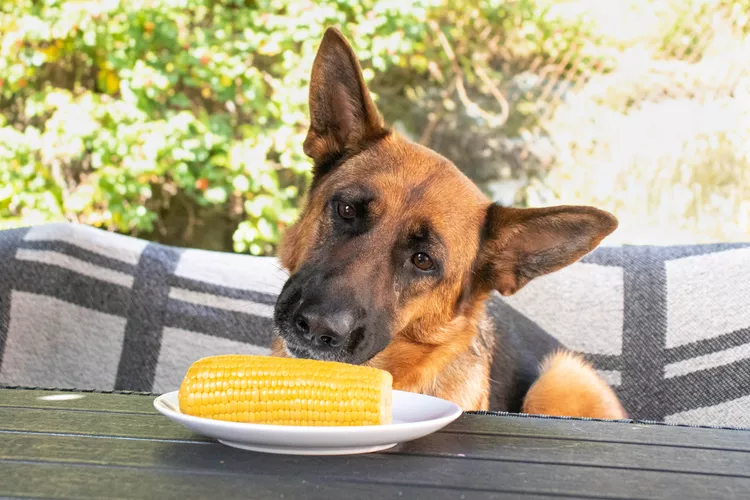
Does your dog beg for a taste of your corn on the cob? You may be tempted to give in to your drooling pooch and offer it as a tasty treat. Some people think corn on the cob is a safe treat for dogs, but this is actually not the case.
Although corn itself is not actually toxic to dogs, feeding corn on the cob can be extremely dangerous.
Warning
Feeding corn on the cob to dogs may lead to gastrointestinal obstruction from ingesting the cob. The risk is highest for medium and small dogs but still can be an issue for large breed dogs as well.
Should Dogs Eat Corn on the Cob?
Many dogs love to chew on corn cobs because they love the taste of corn and any butter or salt that remains. Unfortunately, too many dogs will gulp a whole corn cob or eat large pieces of cob, leading to a gastrointestinal injury or obstruction. This is because corn cobs do not fully break down in a dog's stomach, and the size of the corn cob is often too large to pass through the rest of the gastrointestinal tract. This risk of gastrointestinal injury is highest in small and medium dogs, but large dogs can be affected. In addition, corn cobs can be choking hazards.
Signs of Gastrointestinal Obstruction or Injury
If a dog has a gastrointestinal obstruction or injury, you may not see any signs at first. When the signs do appear, they can vary from mild to severe. Most dogs with GI obstruction or injury will show several signs.
- Lethargy
- Vomiting
- Heaving
- Loss of appetite
- Abdominal discomfort
- Diarrhea
- Constipation/straining to defecate
- Black, tarry stools (due to digested blood in the GI tract caused by injury)
The signs of a GI obstruction may appear similar to the signs of other health issues, so don't jump to conclusions or panic. However, it's essential to contact your veterinarian if your dog is showing any signs of illness, regardless of the potential cause.
What to Do If Your Dog Ate a Corn Cob
If you suspect your dog has swallowed a corn cob, the first thing you should do is contact your veterinarian. Although not all dogs will develop problems after eating corn cobs, it's best to prepare for it just in case. Your vet will advise you on the next steps to take.
Dogs with signs of illness should be taken to the nearest open veterinary office as soon as possible. Gastrointestinal obstruction is an emergency.
Warning
Never attempt to induce vomiting in your dog unless you have been specifically advised to do so by a veterinarian. Inducing vomiting can lead to further damage to your dog's stomach and esophagus.
How to Keep Corn Cobs Away From Dogs
Some dogs will go to great lengths to get tasty treats. This may mean raiding the trash can. When disposing of corn cobs, avoid leaving them in a trash can that your dog can access. The best thing to do is put them in an outside trash or compost bin that is sealed tight and out of reach of dogs or wildlife. Or, you can toss them in a bag in your freezer until trash day.
When entertaining friends and family, make sure everyone knows that corn cobs are off-limits for the dog. In fact, it's best to ask guests to refrain from feeding any kind of table scraps to your dog.
Is Corn Good for Dogs?
Many dogs enjoy the taste of corn. Fortunately, plain corn is safe for dogs to eat in moderate amounts as long as the dog is not allergic to corn.
Dogs can eat corn as a treat or food topping as long as you remove it from the cob. After cooking the corn on the cob, simply cut it off with a knife and offer a small amount. Never add salt, fat, or other seasonings.
Remember that dog treats should never make up more than 10% of your dog's primary diet, corn included. While it is a safe treat, corn does not have many nutritional benefits for dogs. Feeding too many treats and not enough complete and balanced dog food can lead to malnutrition and other issues.
New